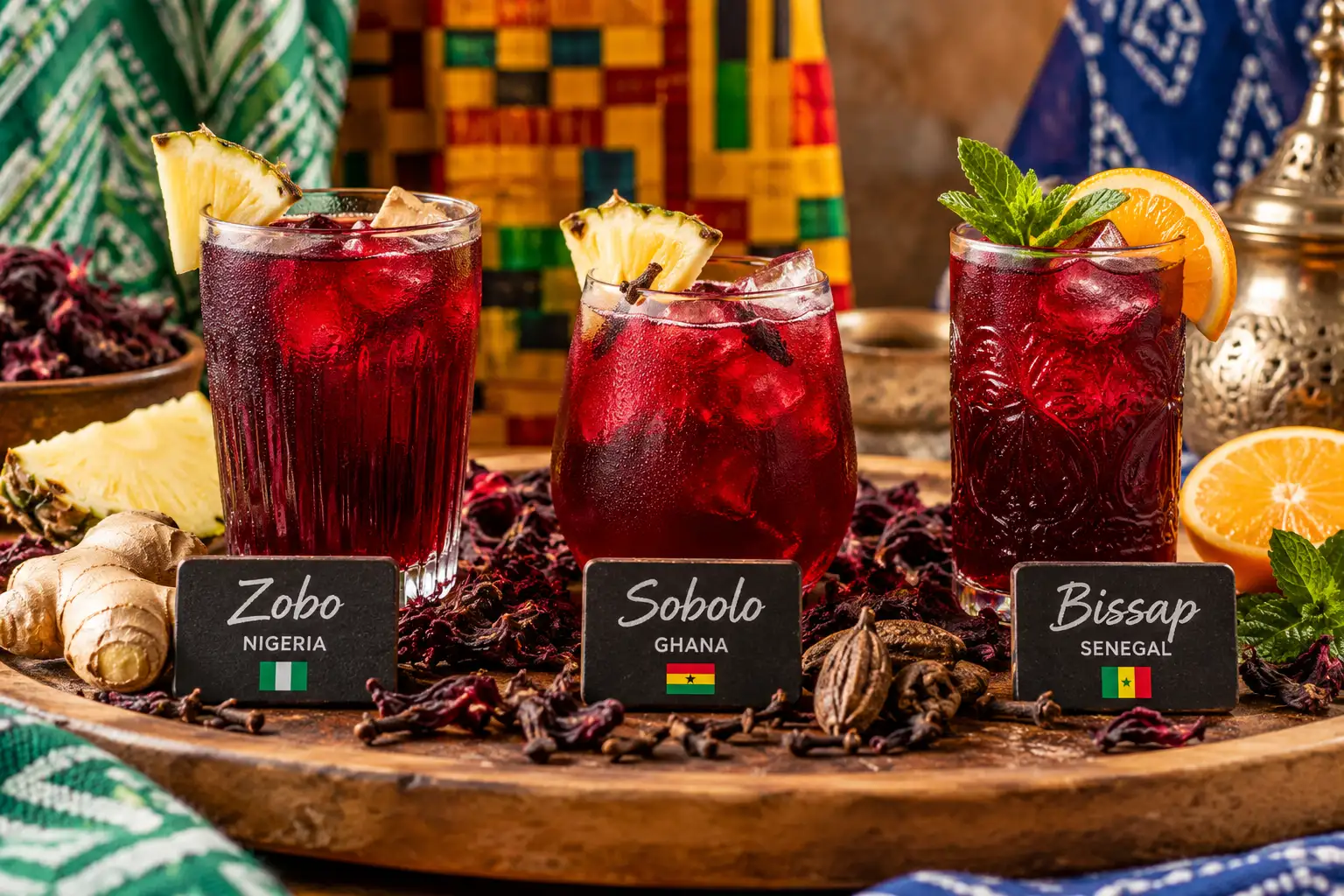
The ruby-red drinks of Nigeria, Ghana and Senegal share a botanical foundation; however, each name carries its own flavors, customs and sense of place.
A chilled glass of hibiscus drink can announce itself before the first sip. Its deep crimson color catches the eye; its tart aroma suggests fruit even when no fruit has been added. Then come the possibilities: ginger, cloves, pineapple, mint, citrus, vanilla or a family ingredient that never appears in a written recipe.
Across West Africa, drinks made from Hibiscus sabdariffa are familiar under several names. In Nigeria, many people call the drink Zobo. In Ghana, it is commonly known as sobolo. In Senegal, Bissap is a widely enjoyed preparation.
These are not simply interchangeable labels for one standardized recipe. They describe living beverage traditions shaped by country, region, household, vendor and occasion.
First, Meet the Plant
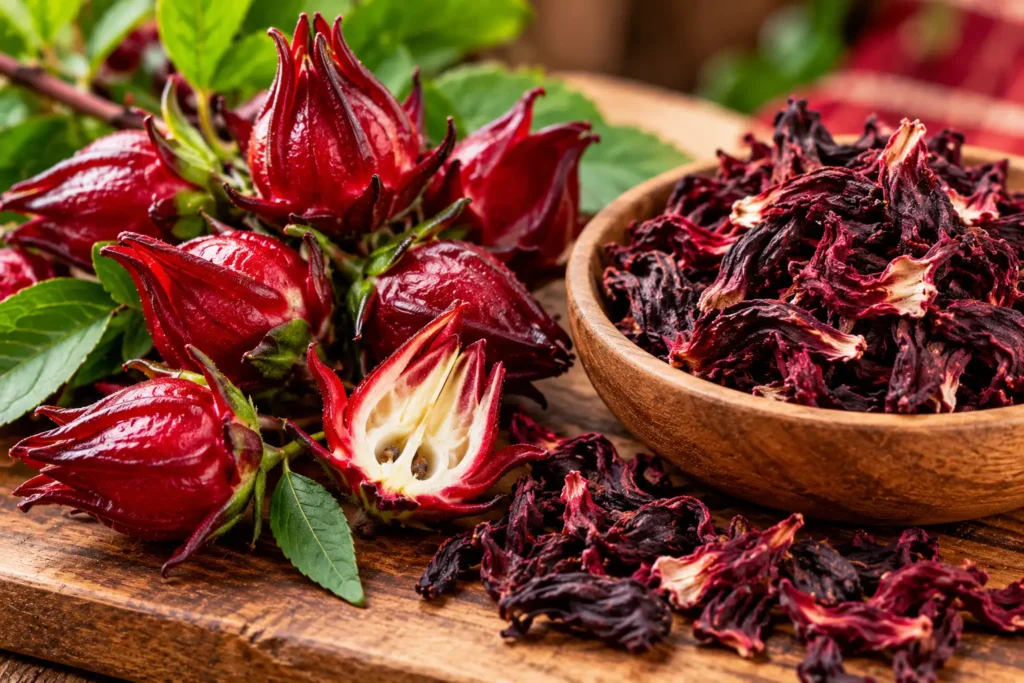
Hibiscus sabdariffa is commonly called Roselle. It belongs to the same broad botanical genus as ornamental hibiscus, but the showy flower in a garden is not necessarily the ingredient in your tea.
The part most commonly dried for a ruby-red infusion is the fleshy calyx that surrounds the plant’s seedpod. It is frequently called a hibiscus “flower” or “petal” in everyday language, but calyx is the more precise term.
When steeped, or simmered, the dried calyces release a brilliant red-purple color and a naturally sharp, fruity flavor. Organic acids contribute to the tartness, while pigments called anthocyanins help create the distinctive color.
That shared ingredient is only the beginning of the story.
Zobo in Nigeria: Bold, Spiced and Highly Personal
In Nigeria, Zobo is prepared in homes and sold by restaurants, street vendors and small beverage businesses. Recipes vary considerably across the country and among families.
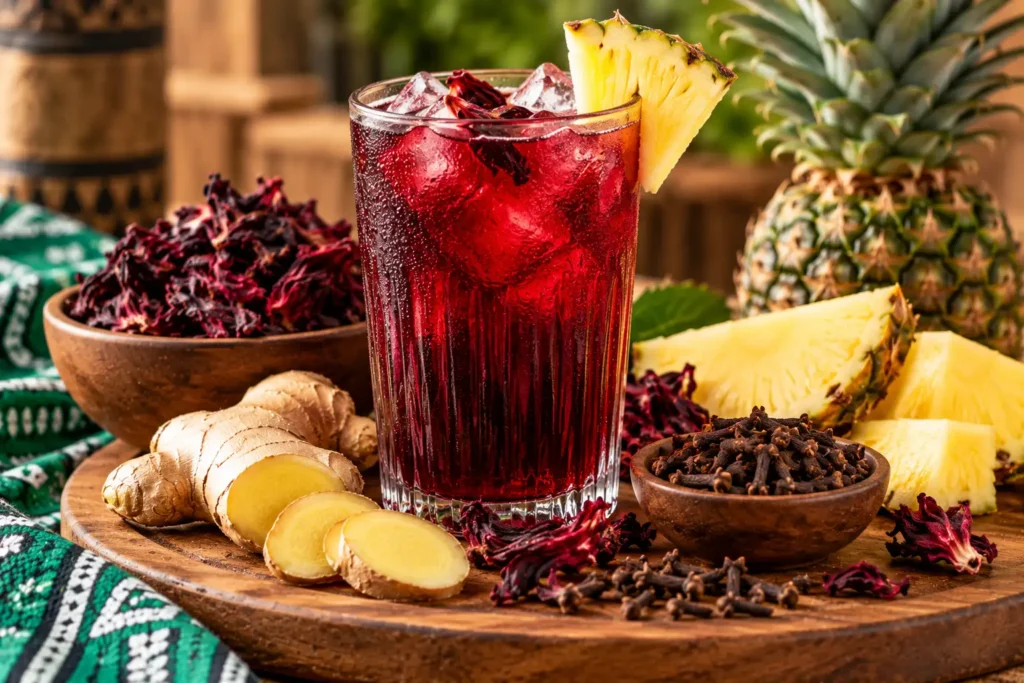
Dried Roselle calyces are generally rinsed and extracted in hot water. Ginger and cloves are familiar partners, while pineapple flesh, juice or peel may add fruitiness and sweetness. Other preparations may include citrus, dates, tamarind or additional spices.
The final drink can be intensely tart, generously sweet, fiercely gingery or somewhere in between. It may be served cold from the refrigerator, poured over ice or enjoyed warm. The person preparing it makes decisions about concentration, spice and sweetness; so, tasting one Zobo does not mean you have tasted them all.
Even the word carries cultural information. “Zobo” is associated with Hausa usage in northern Nigeria, yet the beverage is now recognized and enjoyed across ethnic, regional and social settings. Its widespread popularity should not erase the more specific linguistic and culinary histories behind the name.
Sobolo in Ghana: Refreshment with Layers of Spice
Ghanaian Sobolo also begins with dried Roselle, but its supporting flavors often give it a character of its own.
Ginger and cloves are common, and some versions incorporate pineapple. Depending on the cook, sobolo may also include local aromatics such as grains of Selim, sometimes called hwentia in Ghana, or other carefully selected spices.
There is no official household formula. One family’s sobolo may be light, crisp and fruit-forward; another’s may deliver enough ginger to make the drinker sit noticeably straighter.
Sobolo is served at gatherings, offered as refreshment and sold commercially in bottles or chilled portions. Its appeal is sensory as much as symbolic: vivid color, fragrant spice and a sweet-tart flavor that stands comfortably beside savory foods.
Calling every Ghanaian preparation “hibiscus tea” is not incorrect, but it leaves something important behind. “Sobolo” identifies a beverage within a particular food culture, not merely an ingredient submerged in water.
Bissap in Senegal: A Distinctive Part of the Beverage Table
In Senegal, Bissap is one of several popular local refreshments, alongside beverages made from ginger, tamarind and baobab fruit.
Red Bissap is commonly prepared by infusing Roselle calyces, straining the liquid and sweetening it. Mint, orange-blossom water, vanilla or fruit flavor may appear, depending on the recipe. The balance can move from bracingly tart to almost dessert-like.
The word “Bissap” is associated with Wolof, one of Senegal’s widely spoken languages. As with Zobo and Sobolo, however, no single formula represents every Senegalese kitchen, restaurant or street vendor.
Bissap belongs within Senegalese hospitality and everyday food culture. It should therefore be described with the same specificity we would give espresso in Italy or masala chai in India, not reduced to a generic “exotic African drink.”
Shared Plant, Different Cups
The similarities among these drinks matter. So do their differences.
All three may feature Roselle, ginger and sweetness, but their preparation, flavor combinations and cultural settings are not fixed. Names can also overlap across borders and diaspora communities. Migration, trade, family ties and personal creativity keep recipes moving.
A culturally respectful approach avoids declaring one universal version “authentic.” A recipe may be authentic to a particular cook, family or community without being the only legitimate expression of the drink.
When sharing one, it helps to be precise:
- Name the country and beverage tradition.
- Identify who taught you the recipe, when applicable.
- Describe adaptations honestly.
- Avoid implying that one version represents all of West Africa.
- Let people from the culture define their own food experiences.
Where Tropace Fits into the Story
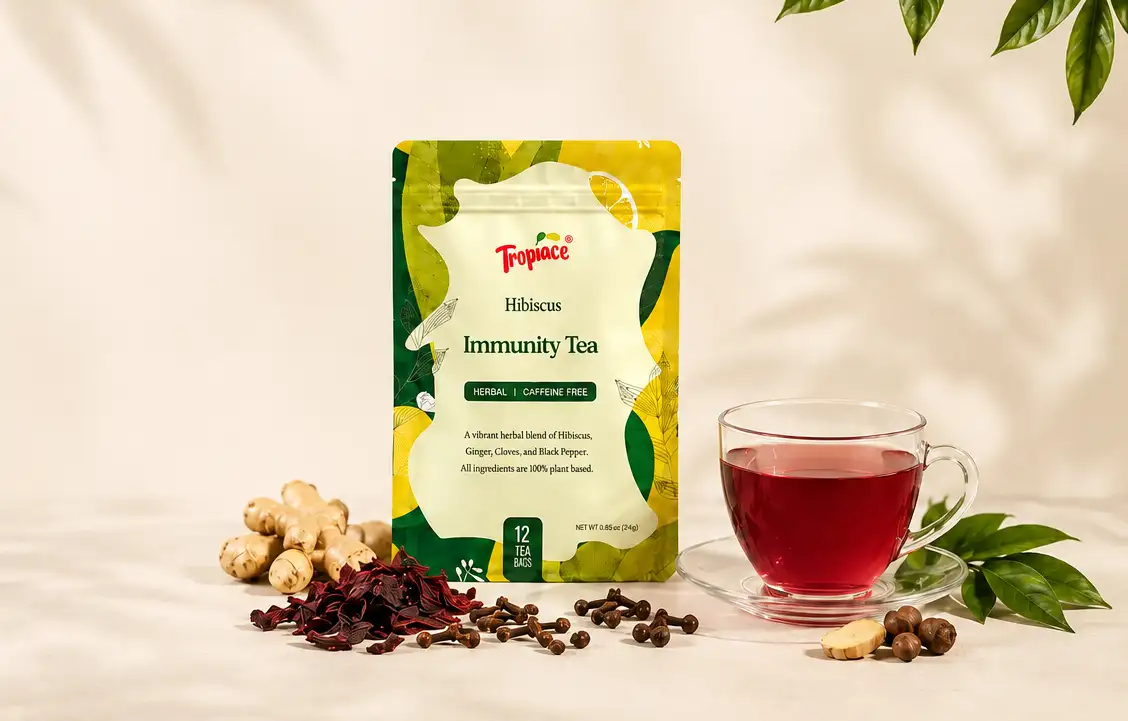
Tropace Hibiscus Immunity Herbal Tea combines organic hibiscus flower, organic ginger, organic cloves and organic black pepper. Those ingredients create a tart, warming infusion that may feel familiar to people who grew up with spiced hibiscus drinks.
It is still a distinct Tropace blend, not a claim to reproduce every Nigerian Zobo, Ghanaian Sobolo or Senegalese Bissap recipe.
Enjoy it hot, chill it for a brighter refresher or customize it with citrus or pineapple. The experience can honor hibiscus traditions while remaining clear about what is heritage, what is family practice and what is contemporary interpretation.
Practical Takeaways
- Zobo, Sobolo and Bissap share Hibiscus sabdariffa as a foundation.
- Nigeria, Ghana and Senegal each have identifiable beverage traditions.
- The red brewing ingredient is technically the Roselle calyx.
- Ginger, cloves, pineapple, mint and other additions vary by place and household.
- Traditional use is cultural history, not automatic proof of a medical benefit.
- Ask people how their families prepare the drink rather than searching for one “correct” recipe.
A Name Can Hold a Whole Table
Hibiscus connects many cups, but it does not make them identical. Zobo, Sobolo and Bissap each hold stories of taste, language, hospitality and personal memory.
The most respectful way to enjoy that richness is to notice both the connection and the distinction, to appreciate the shared crimson ingredient while allowing every community, family and cook to name and season the drink for themselves.
Explore Tropace’s vibrant, culturally rooted herbal blends at TropaceCompany.com.
